


The Car That Was Never Fully Covered
A real-world auto insurance story showing how missing collision and comprehensive coverage can violate lender requirements and leave drivers financially exposed.
AUTO INSURANCEFULL COVERAGE EXPLAINEDINSURANCE MISTAKES
By The Coverage Brief
10/6/20251 min read
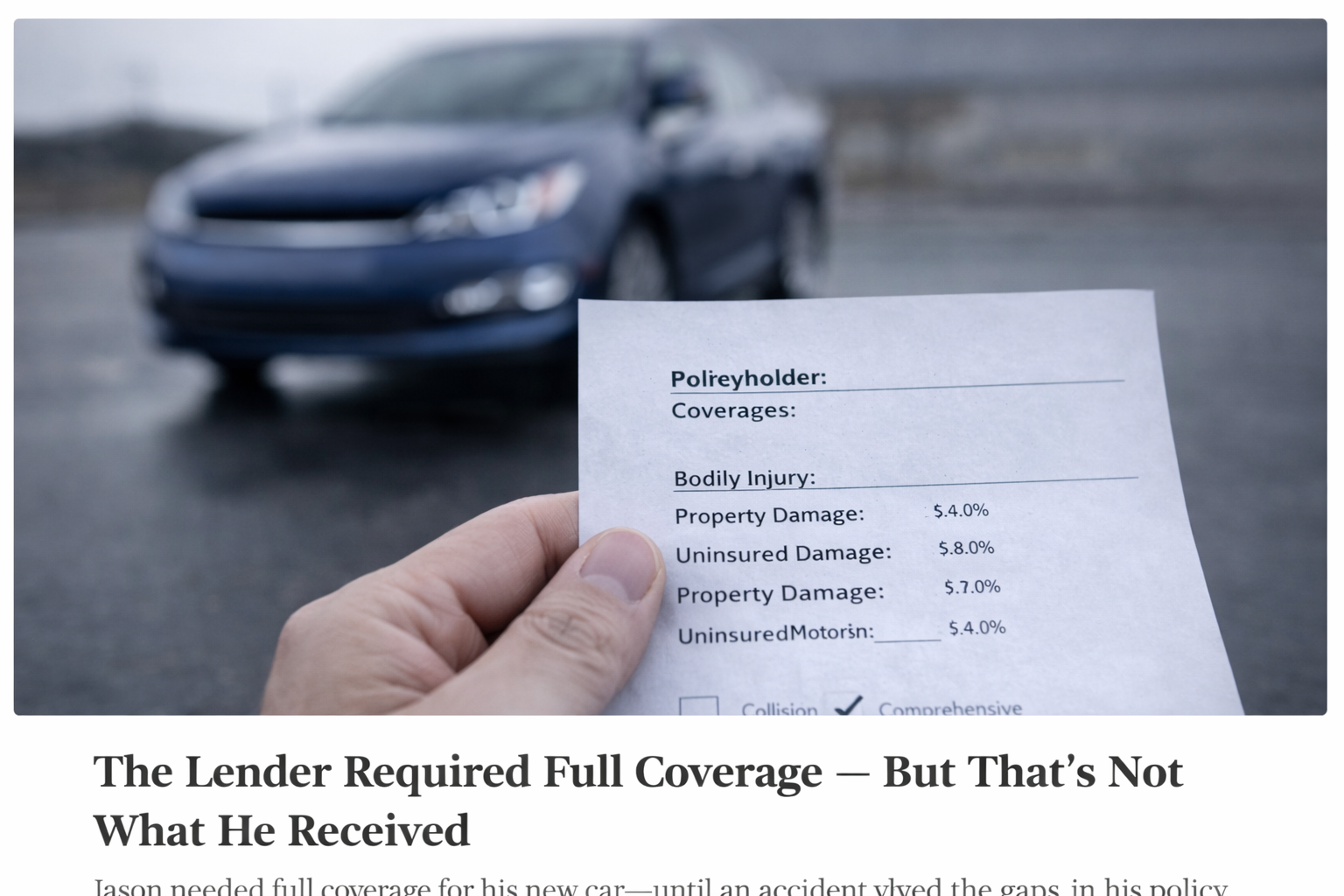
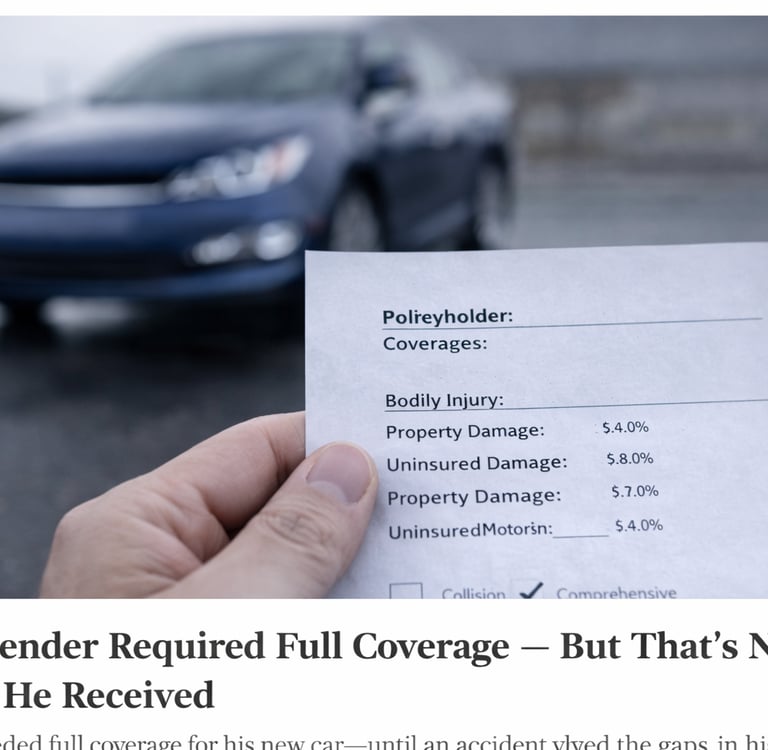
When Jason purchased his new vehicle, the dealership made one thing clear: proof of full coverage insurance was required before the car could leave the lot.
Full coverage typically means collision and comprehensive coverage in addition to liability, with the lender listed as lienholder.
The first quote he received was expensive.
Another option appeared — cheaper, manageable, easier to accept.
He signed electronically.
He drove home satisfied.
The paperwork, like most paperwork, went unread.
What he didn’t realize was that the issued policy contained liability coverage only. No collision. No comprehensive. The lender was not properly listed.
Months passed. He moved to a new apartment. Life became complicated. Relationships shifted. He changed his phone number and forgot to update his contact information everywhere.
Then came the accident.
His vehicle was declared a total loss.
The insurance company confirmed what the policy stated: there was no collision coverage.
The lender still required repayment of the remaining balance — more than $20,000.
Sometimes lenders place force-placed insurance if coverage lapses, but that insurance protects the lender’s interest, not the borrower’s equity.
Jason had neither.
He had a loan.
And no car.
Insurance policies do not protect what is assumed.
They protect what is written.
contact
© 2025 The Coverage Brief. All rights reserved. The Coverage Brief is an independent digital publication owned and operated by Essiel Express, LLC. We do not issue insurance policies or bind coverage.
HELP
ABOUT THE COVERAGE BRIEF
How It Works